

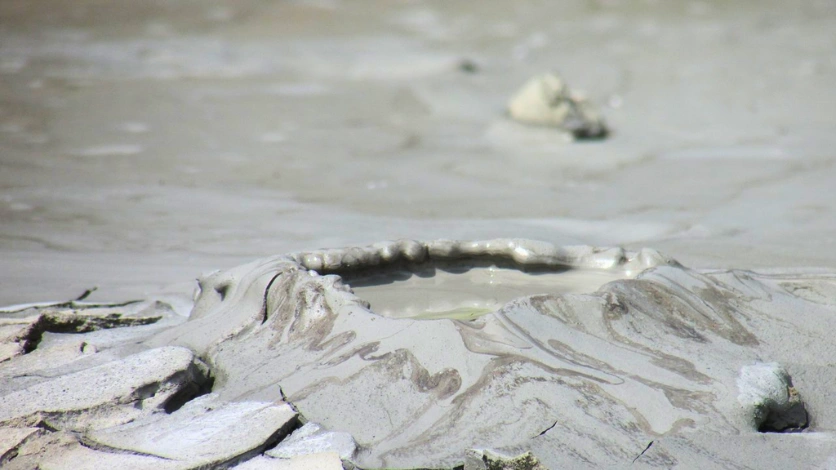
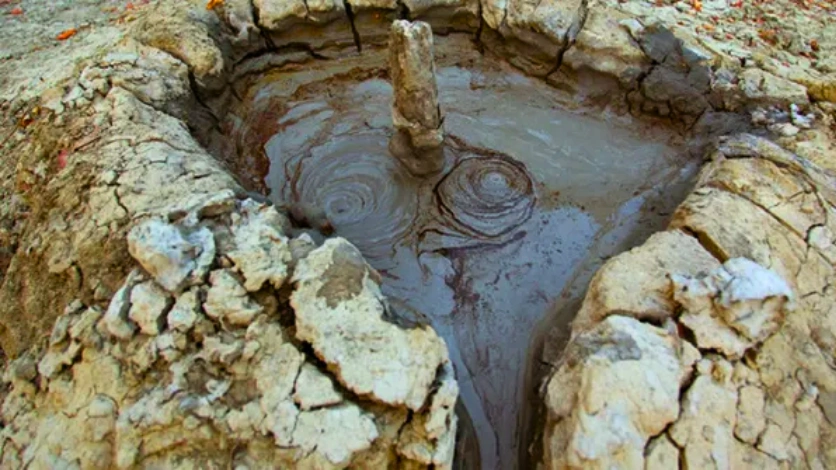
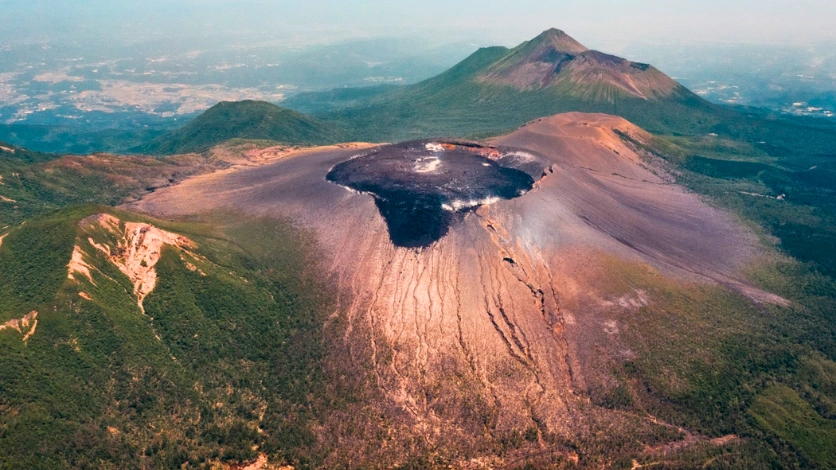
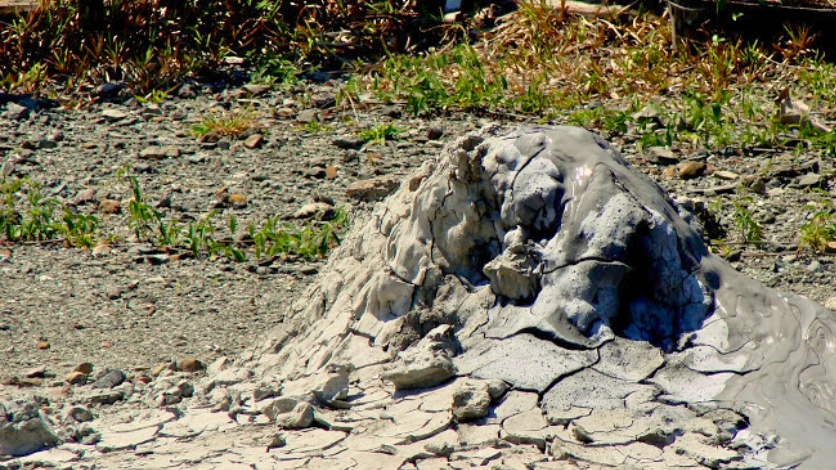
When people hear the word volcano, they think of fire, lava, red-hot rock. The mud volcano at Baratang is nothing like that. It is cold, for one thing, and the stuff that bubbles up is grey, thick, and looks exactly like wet cement. But it does bubble, slowly, steadily, with a soft glooping sound that feels almost out of place in the quiet forest setting. Located a short drive from the Baratang jetty, the mud volcano is usually included as a quick stop on the limestone cave trip. It is not the main attraction, you will not spend more than twenty minutes here, but it is strange enough to stick in your memory. A patch of bare, grey earth, fenced off to keep people from falling in, with mud plopping up from below like something out of a low-budget science fiction film. The Andamans have several of these, but Baratang's is the easiest to reach and the most visited.
About the Mud Volcano of the Andaman Islands
The mud volcano is located on Baratang Island, about 100 kilometres north of Port Blair, very close to the jetty where visitors arrive for the limestone caves. Unlike traditional volcanoes that erupt molten rock, a mud volcano erupts a cold mixture of mud, water, and gases, usually methane, that gets pushed up from deep underground by pressure from the earth's crust. The Andaman region is geologically active, sitting on a fault line, which is why these formations exist here.
The cave system at Baratang is a limestone karst formation. The caves were carved out over a very long period by slightly acidic groundwater dissolving the calcium carbonate in the rock and creating hollow chambers and tunnels. What you see inside, the stalactites hanging from the ceiling and the stalagmites rising from the floor, are the reverse of that process: calcium carbonate redepositing slowly as water drips through the rock, building formations at a rate of roughly a cubic centimetre per century depending on conditions.
The main crater at Baratang is maybe ten to fifteen feet across, fenced off with a wooden railing to keep visitors at a safe distance. The mud inside is grey and thick, almost like dough, and it moves in slow motion, bubbles rising to the surface and popping with a soft sound. The area around the crater is bare and cracked, with no vegetation growing nearby, the mud and gases make the soil too unstable for plants to take root.
A short walkway leads from the parking area to the viewing platform. The walk takes maybe five minutes, through dry, scrubby forest that feels different from the dense jungle you drive through to reach Baratang. There are a few small craters along the way, most of them inactive, just dry holes in the ground. But the main one is still active, and it has been bubbling for as long as locals can remember.
Quick Facts
- The Mud Volcano is one of the few accessible mud volcanoes in India.
- Visitors reach the site after a short drive and an easy forest walk.
- The volcano releases cool mud and natural gases instead of lava.
- The protected site is managed by the Andaman and Nicobar Forest Department.
- It is usually visited with the Limestone Caves and Mangrove Creek on a day trip.
The History of Mud Volcano
- Formation and Natural Phenomenon
The mud volcano on Baratang has been active for decades, possibly much longer. The Andaman and Nicobar Islands lie on a geological fault line where two tectonic plates meet, the Indian Plate and the Burmese Plate. The movement of these plates creates pressure underground, and that pressure forces water, mud, and gases up through cracks in the earth's surface. The result is a mud volcano, cold instead of hot, but still a volcano in the geological sense.
Locals have known about the mud volcano for generations, but it only became a tourist attraction after the limestone caves started drawing visitors to Baratang. Today, almost every limestone cave trip includes a quick stop here. The site is protected by a fence, and there are a few small shops near the parking area selling water, snacks, and souvenirs.
In 2005, a new mud volcano erupted in the nearby village of Shyampur, damaging houses and forcing evacuations. That eruption was larger and more destructive than anything seen at the tourist site. It was a reminder that these formations are not just curiosities, they are signs of the active geology happening beneath the islands.
Today, the Baratang mud volcano is safe to visit, and the bubbling is slow and gentle. The area is monitored, and the fence keeps visitors at a reasonable distance. But the site has a strange, almost eerie feel, a patch of grey, barren earth in the middle of a green forest, with mud plopping up from somewhere deep below.
Plan Your Mud Volcano Visit with Our Local ExpertsWhat to See on Mud Volcano
The mud volcano is a quick stop, fifteen to twenty minutes at most. But it is a strange enough sight to be worth getting out of the car for. Here is what to expect.
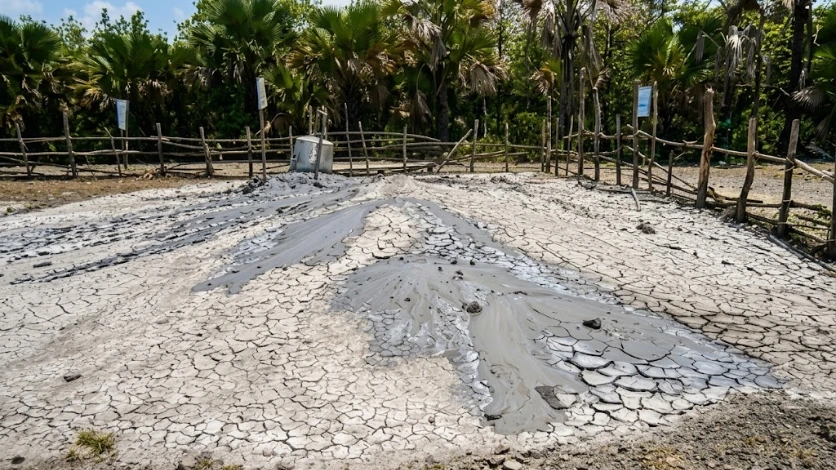
Active Mud Crater
See the small mud crater where natural gases slowly push cool grey mud to the surface, creating one of India's rare geological attractions.
Forest Walk
Enjoy a short walk through tropical forest from the parking area, surrounded by native trees, birds, and the peaceful natural beauty of Baratang Island.
Viewing Platform
The raised viewing platform offers a safe vantage point to observe the mud volcano while protecting the fragile ground around the natural formation.
Nature Photography
Capture unique photographs of the bubbling mud crater, surrounding forest, and peaceful landscape, a memorable travel experience.
Visiting the Mud Volcano
- A Rare Natural Wonder in Baratang
The Mud Volcano at Baratang Island is one of the most unusual natural attractions in the Andaman Islands. Unlike the fiery volcanoes most people imagine, this one quietly releases cool mud and natural gas through small vents in the ground. It is a rare geological phenomenon and one of only a few mud volcanoes found in India.
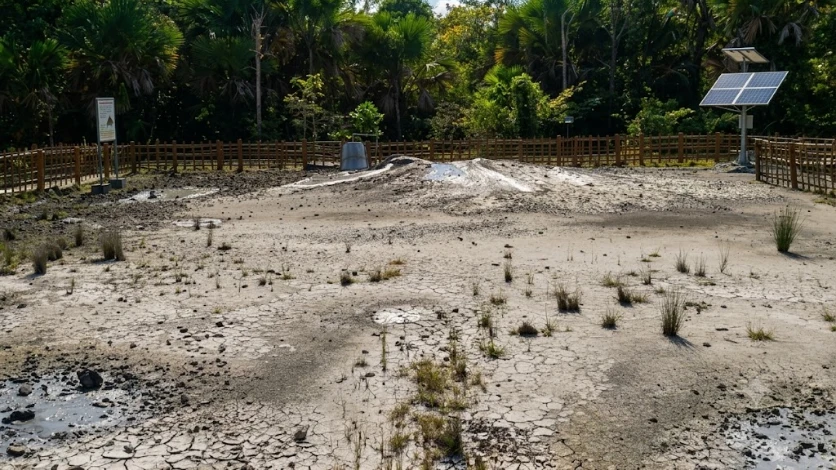
Reaching the site involves a short walk through a peaceful forest from the parking area. A raised viewing platform lets visitors safely observe the mud crater without disturbing the fragile surroundings. While the volcano is small in size, its natural formation and the quiet setting make it an interesting stop during a Baratang Island trip.
Most visitors combine the Mud Volcano with the Limestone Caves and a mangrove creek boat ride as part of a full-day excursion from Port Blair. The best time to visit is between October and May, when the weather is pleasant and road conditions are generally better for travel.
Book Your Baratang Island VisitTips for Visiting the Limestone Caves at Baratang
- Leave Port Blair by 5 to 6 AM. The convoy from Jirkatang Checkpost departs at fixed times and will not wait. Missing it adds hours to your day. Most organised day tours from Port Blair factor this in and handle the convoy timing for you.
- Carry a torch. Cave lighting covers the main route but the sections between fixed lights are dark. A small handheld torch makes navigation easier and lets you look at formations that are off the main lit path.
- Wear closed shoes with grip. The forest trail involves roots and uneven ground, and the cave floor is rocky and can be wet. Sandals are manageable but closed shoes give better ankle support and traction.
- Do not touch the cave formations. Contact from hands deposits oils and salts on the surface that permanently disrupt the mineral deposition process. Formations that are regularly touched stop growing and discolour over time.
- Carry water and snacks from Port Blair or Baratang village. There are no food stalls at the cave site or along the forest trail. Options in Baratang village are limited, so stocking up before you leave Port Blair is the safer approach.
- Avoid visiting during the monsoon (June to September). Heavy rain makes the forest trail slippery, boat operations on the mangrove creek may be suspended on rough days, and road conditions on the Andaman Trunk Road can be affected by flooding.
Frequently Asked Questions
The Mud Volcano is a rare natural geological formation where underground gases slowly push cool mud to the surface through small vents. Unlike traditional volcanoes, there is no lava or volcanic eruption, making it a safe and unique attraction to visit.
From Baratang Jetty, visitors travel by road for about 7 kilometres before taking a short walk through a forest trail to reach the Mud Volcano. It is commonly visited as part of a Baratang day trip from Port Blair.
Most visitors spend around 30 to 45 minutes at the site. When combined with travel time, the complete visit usually takes about one to one and a half hours from Baratang Jetty.
The best time to visit is between October and April when the weather is pleasant and the walking trail remains dry and comfortable. The site can become muddy during the monsoon season.
Yes. Most travellers combine the Mud Volcano with the Limestone Caves, Mangrove Creek boat ride and Parrot Island, making it a popular full-day excursion from Port Blair.
Include Limestone Caves in Your Andaman Itinerary
The Limestone Caves work best as the first activity of a Baratang day trip, completed in the morning after the convoy drive from Port Blair. Follow it with the Mud Volcano after lunch and finish the day at Parrot Island for the sunset roosting. That structure covers the three main attractions at Baratang in one well-timed day without unnecessary backtracking.
Our team handles the convoy timing, boat bookings, and guide arrangements for the Limestone Caves visit as part of a full Baratang day trip or as part of a wider Andaman itinerary from Port Blair.
More Attractions on Baratang Island
View All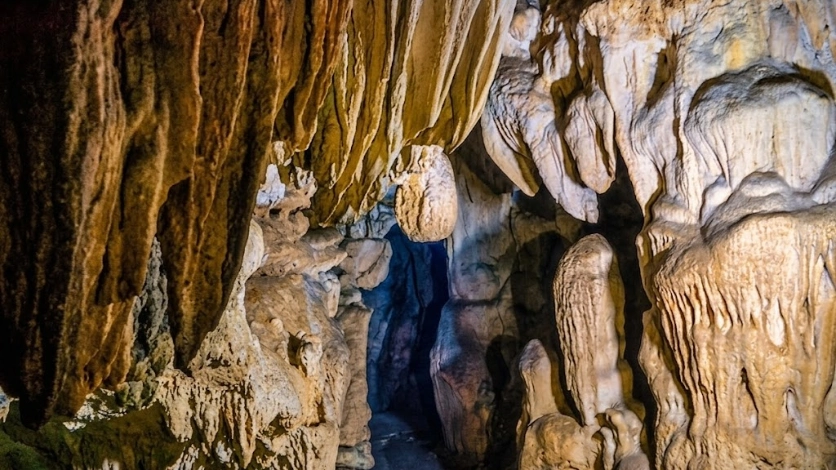
Baratang Island Travel Guides
View AllDiscover helpful guides and travel tips related to Limestone Caves.
 14 July 2025
 18 Nov 2025
 21 Jan 2026
Monsoon Food & Culture Festival 2026: What's On at ITF Ground This Week
Read More 13 Jul 2026