
Plan your Andaman holiday with local experts based in Port Blair
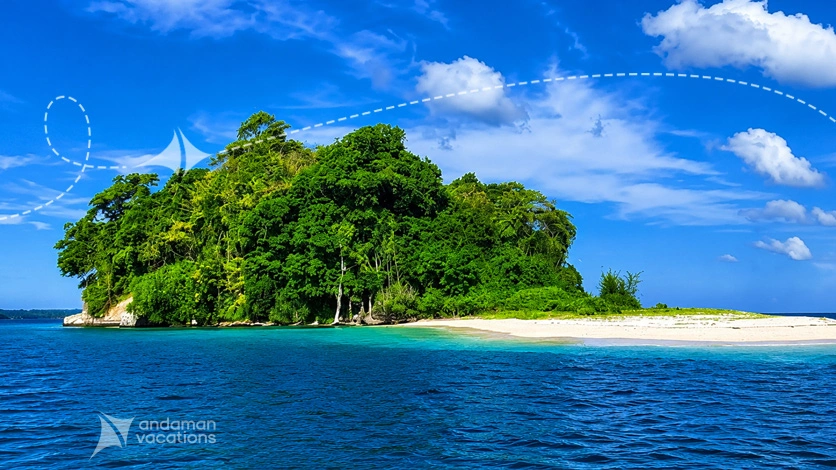
Cinque Island is a pair of uninhabited islands, North Cinque and South Cinque, located approximately 37 kilometres south of Port Blair in the South Andaman district. Both islands fall within the Cinque Island Wildlife Sanctuary, a protected area under the Wildlife (Protection) Act, 1972, and access requires a permit from the Chief Wildlife Warden's office in Port Blair. The islands are connected by a narrow sandbar that appears and disappears with the tide, the beaches are among the most pristine in the entire Andaman archipelago, and the coral reefs surrounding both islands are considered by marine biologists to be among the healthiest and most diverse in Indian waters. Cinque Island is not on the standard Andaman tourist circuit. Getting there requires advance permit coordination, a boat from Chiriya Tapu or Wandoor, and a genuine willingness to put in the effort that separates an extraordinary Andaman experience from an ordinary one. For those who make it, it is consistently described as the finest single day in the islands.
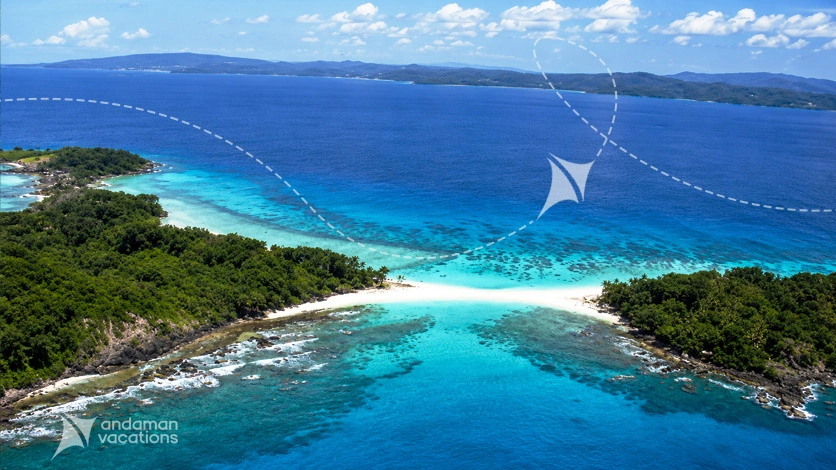
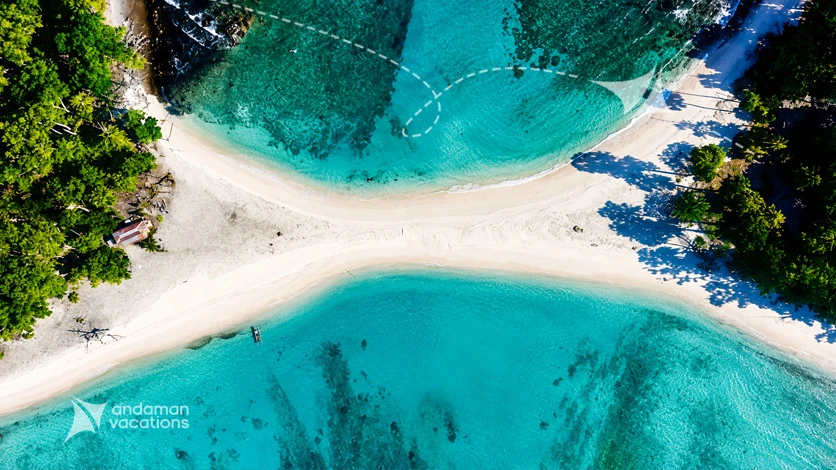
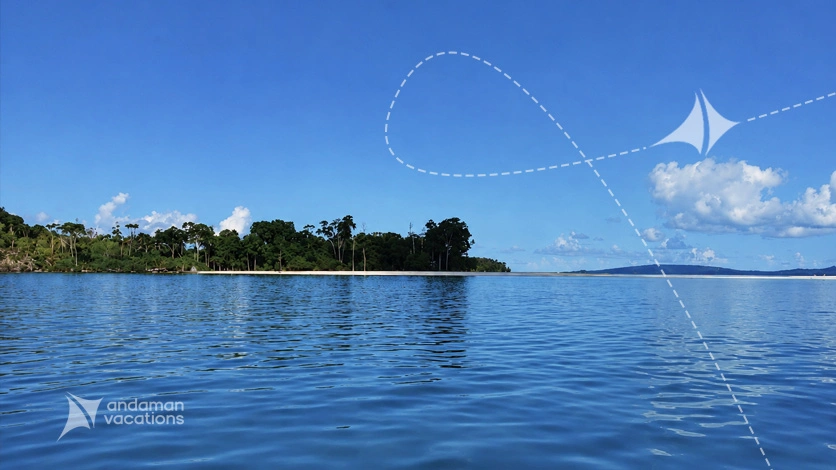
North Cinque and South Cinque are two small uninhabited islands situated in the Ritchie's Archipelago, approximately 37 kilometres south of Port Blair. North Cinque is the larger of the two, covering about 9.13 square kilometres, while South Cinque is smaller and more densely forested. The two islands are separated by a shallow channel that narrows to a white sand tombolo, a natural sandbar connecting two landmasses, at low tide, creating one of the most photographed natural formations in the Andamans. The surrounding waters are shallow, crystal clear, and of exceptional marine quality, with visibility regularly exceeding 20 metres in good conditions between November and April.
The coral reef system around Cinque Island is classified among the most intact in the Andaman Sea. The absence of permanent human habitation, the protected area status, and the strict permit requirement that limits daily visitor numbers have all contributed to a reef that has not undergone the bleaching and physical damage seen at more heavily visited sites like Elephant Beach and Jolly Buoy. Hard coral coverage, including large table corals, brain corals, and massive Porites colonies, remains high. The fish biomass is correspondingly dense, Napoleon wrasse, bumphead parrotfish, reef sharks, eagle rays, and green sea turtles have all been recorded in the waters around Cinque Island by marine survey teams.
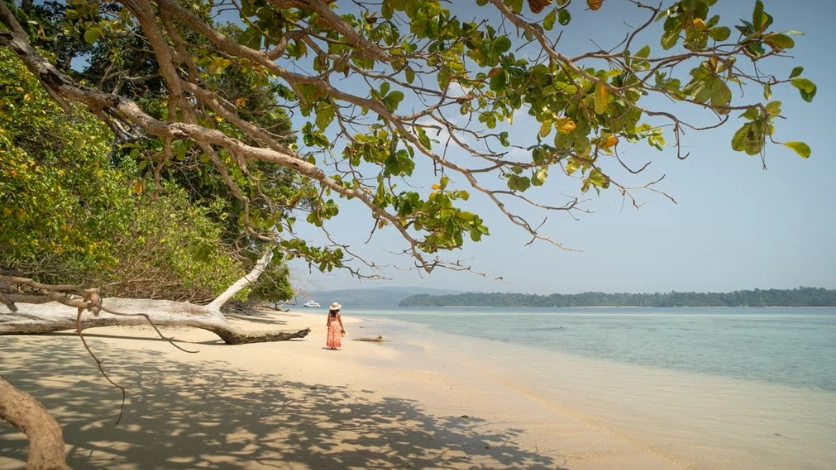
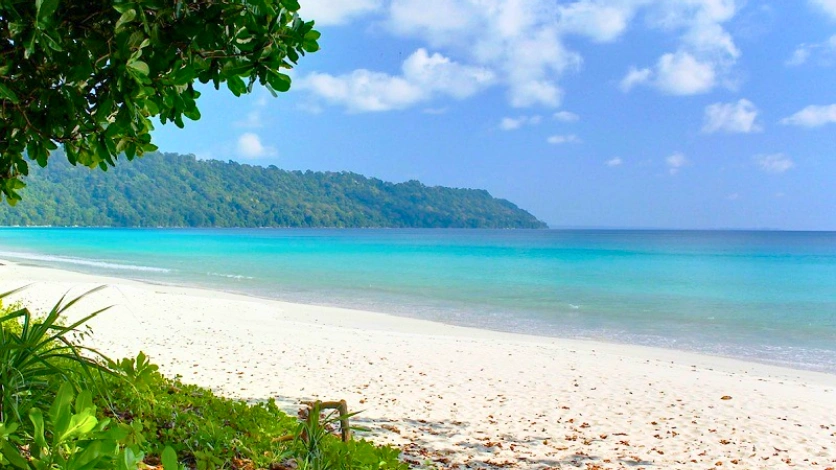
The beaches on both islands are white sand, entirely natural, and completely without infrastructure. No beach shacks, no sun loungers, no generators, no permanent structures of any kind. What you find on landing is what the Andaman beaches looked like before tourism arrived, a shoreline backed by dense tropical forest, clear water at the edge, and silence apart from the sea. The combination of this beach quality, the reef condition, and the protected area exclusivity makes Cinque Island the most compelling day trip available from Port Blair for travellers who have already seen Havelock and Neil and want to understand what the Andamans are capable of at their absolute best.
Cinque Island takes its name from the Italian word for five, cinque, a legacy of early European cartographic and navigational history in the Bay of Bengal. Portuguese and later European maritime explorers named many features of the Andaman archipelago during the sixteenth and seventeenth centuries, and Cinque Island's name reflects this period of European navigation through the islands before British colonial administration was formally established. The island group had no permanent indigenous settlement, unlike some parts of the Andamans that were inhabited by the Great Andamanese or Onge peoples, and remained essentially uninhabited through the colonial period.
During the British administration of the Andamans, Cinque Island's waters were used by fishing communities and occasional small vessel traffic moving along the South Andaman coast. The island itself was not cleared for agriculture or settlement, which is the primary historical reason its forest and reef systems survived intact into the modern period. The lack of development pressure that destroyed mangrove and reef habitats elsewhere in the South Andaman district never reached Cinque Island in any significant form.
The island was brought under formal wildlife protection through the declaration of the Cinque Island Wildlife Sanctuary, which covers both North and South Cinque along with the surrounding marine area. The sanctuary designation recognised the exceptional biodiversity value of the reef system, the nesting habitat provided by the undisturbed beaches for sea turtles, and the importance of maintaining at least some areas of the South Andaman marine environment free from the extraction and physical disturbance that had affected other reef systems in the archipelago. The permit system for visitor access was established as a tool for limiting human pressure on the sanctuary while allowing controlled tourism to continue.
Cinque Island gained wider recognition in India and internationally following the 2004 Indian Ocean tsunami, which caused significant damage to reef systems and coastal forest across the Andaman and Nicobar Islands. Post-tsunami surveys found that the Cinque Island reef, despite the seismic and wave impacts of the event, recovered more rapidly than heavily disturbed reef systems in the south, a finding attributed to the baseline reef health maintained by the protection regime. This recovery data strengthened the scientific case for the permit and access restriction approach that governs the island to this day.
Plan Your Cinque Island Trip with Our Local ExpertsCinque Island is about the reef, the beach, and the complete absence of tourist infrastructure. Every activity here, snorkelling, diving, swimming, walking the sandbar, happens against a backdrop of natural quality that is simply not available at any more accessible Andaman destination.
The reef around Cinque Island is the primary reason to make the trip. Hard coral coverage is among the highest of any accessible snorkelling site in the Andamans, with large table corals, brain corals, and massive Porites colonies that indicate reef systems undisturbed for decades. The fish population is correspondingly dense, bumphead parrotfish in schools, Napoleon wrasse, large grouper, surgeonfish, lionfish in the reef crevices, and the full range of smaller reef species that indicate a healthy coral ecosystem. Visibility between November and April regularly exceeds 20 metres. Bring your own mask and fins, there are no rental operators on the island and the quality of equipment you carry directly affects the quality of your reef experience. Entry to the water is from the beach on both islands, with the reef accessible within swimming distance of the shore.
At low tide, the shallow channel between North and South Cinque Island narrows to a white sand tombolo, a natural sandbar that connects the two islands and allows you to walk between them with the sea at ankle depth on both sides simultaneously. The sandbar is one of the most visually striking natural formations in the Andamans and one of the most photographed. The experience of standing on a narrow strip of white sand with open blue water on either side and two forested islands rising ahead and behind you is genuinely difficult to describe adequately. The tombolo is only fully walkable at or near low tide, tide timing is therefore a critical factor in planning the Cinque Island trip, and our team coordinates boat departure times from Port Blair to ensure arrival at the island coincides with the right tidal window.
Cinque Island is one of the most coveted dive sites in the Andamans among experienced divers, though the logistics are more complex than diving at Havelock. The reef system drops into deeper water around the island's edges, creating coral walls and overhangs that support species not found in the shallower snorkelling zones. Reef sharks, primarily whitetip and blacktip reef sharks, are regularly encountered at depth. Spotted eagle rays move along the reef edge. Green sea turtles are present throughout the dive sites. The Napoleon wrasse that frequent the Cinque reef are among the largest specimens recorded at any Andaman dive site. Dive trips to Cinque Island require advance arrangement with a certified Port Blair dive operator who holds the relevant permissions for the sanctuary area, this cannot be arranged on the day of the visit.
The beaches on North and South Cinque are what Andaman beaches were before resort development arrived. White sand, entirely clean, backed by dense tropical forest, with no structures, no signage, and no other visitors within sight. The forest edge along the upper beach on both islands rewards slow exploration, hornbills are audible in the canopy, sea eagles patrol the coastline above the reef, and the transition zone between beach and forest holds a range of coastal species. No collection of shells, coral, or any natural material is permitted within the sanctuary. Swimming from the beach is safe in calm conditions between November and April. The island has no shade structures, the forest edge provides the only relief from direct sun, which is significant given the strength of the equatorial light on open white sand.
| Location | Ritchie's Archipelago, South Andaman district; approximately 37 km south of Port Blair. Nearest boat departure points: Chiriya Tapu (approx. 30 km from Port Blair) and Wandoor (approx. 29 km from Port Blair) |
|---|---|
| Island Composition | Two uninhabited islands, North Cinque (approx. 9.13 sq km) and South Cinque (smaller). Connected at low tide by a natural white sand tombolo. Both islands fall within Cinque Island Wildlife Sanctuary |
| How to Reach | Private chartered boat from Chiriya Tapu or Wandoor jetty, approximately 1 to 1.5 hours by speedboat depending on sea conditions. No government ferry service to Cinque Island. Boat and permit must be arranged in advance through a registered operator |
| Best Time to Visit | November to April. December to March for optimal reef visibility, calmest sea conditions, and the best sandbar access. Avoid May to October, rough seas make the boat crossing unsafe and the sanctuary may be closed to visitors during peak monsoon months |
| Ideal Visit Timing | Full day trip, depart Port Blair by 6:30 to 7:00 AM. Plan boat arrival at Cinque to coincide with low tide for sandbar access. Check INCOIS tide tables before booking departure time |
| Permits Required | Wildlife sanctuary entry permit mandatory, issued by the Chief Wildlife Warden's office, Van Sadan, Haddo, Port Blair. Indian nationals: permit required. Foreign nationals: Restricted Area Permit (RAP) plus Wildlife Sanctuary permit. Both must be obtained before departure. Permit quota limits daily visitors, advance booking essential during peak season |
| Key Attractions | Pristine coral reef snorkelling, natural sandbar tombolo between North and South Cinque, scuba diving, uninhabited beach, sea turtle sightings, reef shark encounters, bumphead parrotfish, eagle rays, intact tropical forest |
| Facilities Available | None. No food, water, toilets, shade structures, or any permanent infrastructure on either island. Carry all food, water, and supplies from Port Blair. Pack out all waste, no littering within the sanctuary |
| What to Carry | Own snorkelling equipment (mask, fins, snorkel), minimum 3 litres of water per person, packed food, sunscreen, hat, reef shoes, waterproof bag for valuables, seasickness medication if prone to motion sickness on open water crossings |
| Nearby Attractions | Chiriya Tapu Beach and lighthouse (departure point, worth a brief stop), Wandoor Beach and Mahatma Gandhi Marine National Park, Jolly Buoy Island (easier permit, alternative for first-time visitors), Port Blair (37 km north) |
Start the permit process at least 3 to 5 days before your intended visit date, not the day before. The Chief Wildlife Warden's office in Port Blair processes Cinque Island sanctuary permits and the daily visitor quota is strictly enforced. During peak season from December to February, permits for preferred dates are taken up quickly. Our team handles this process as a standard part of all Cinque Island trip bookings, but if you are arranging independently, go to the Van Sadan office in Haddo in person rather than attempting to navigate the process by phone. Carry your original photo ID and, for foreign nationals, your RAP documentation.
Time the boat departure from Chiriya Tapu or Wandoor to arrive at Cinque Island around low tide. The sandbar between North and South Cinque, the most visually distinctive feature of the island, is only walkable at or near low tide. A visit timed incorrectly means the sandbar is submerged and one of the defining Cinque Island experiences is unavailable. Check the INCOIS tide prediction tables for the date of your visit, calculate the travel time from your departure point, and work backward to set your departure time. The crossing takes 1 to 1.5 hours by speedboat depending on sea conditions.
Bring significantly more water than you expect to need. The equatorial sun on open white sand with no shade structures and the physical exertion of snorkelling and swimming combine to create rapid fluid loss. Three litres per person for a full day visit is the minimum. Carry packed food from Port Blair, there is nothing available on the island and boat operators do not supply meals. A waterproof dry bag for your phone, camera, and documents is essential, the boat crossing and the beach entry into the water both create spray and splash exposure.
Do not collect anything from Cinque Island, not shells, not coral fragments, not sand. The wildlife sanctuary regulations prohibit removal of any natural material, and the integrity of the reef and beach depends on visitors treating it as a place to observe rather than take from. No feeding of fish or marine animals. No anchoring on the reef, ensure your boat operator uses a sand anchor or a mooring buoy rather than dropping anchor on live coral. These are not merely regulations, they are the reason the reef at Cinque looks the way it does while every other heavily visited reef in the Andamans has deteriorated. Respect for the sanctuary rules is what keeps the experience worth having.
Cinque Island is the Andamans without the tourist infrastructure, the reef, the beach, the forest, and the water in the condition that drew people to these islands in the first place. It requires more planning than a day trip to Jolly Buoy or a ferry to Havelock. The permit process, the boat arrangement, the tide coordination, and the early departure from Port Blair all add friction that most itineraries avoid. The reward is a day on an uninhabited island with intact coral, clear water, a white sand tombolo between two forested landmasses, and the particular quality of silence that comes from being somewhere genuinely protected from the pressures that have reshaped the rest of the Andamans.
Our team at Andaman Vacations India manages all aspects of Cinque Island day trips, wildlife sanctuary permits, boat charter from Chiriya Tapu or Wandoor, tide-coordinated departure timing, snorkelling equipment arrangements, and full-day logistics. We include Cinque Island as an optional addition to Port Blair and South Andaman itineraries for travellers who want the best reef experience available in the islands and are prepared to put in the planning it requires. Tell us your travel dates and we will handle everything from the permit application to the boat departure time.
"I’ve traveled with many agencies, but this one stands out! personalized approach and attention to detail made our honeymoon unforgettable.