

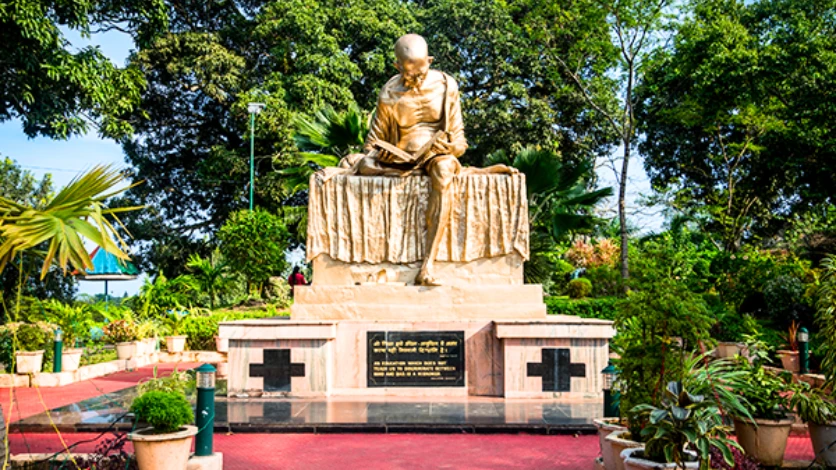
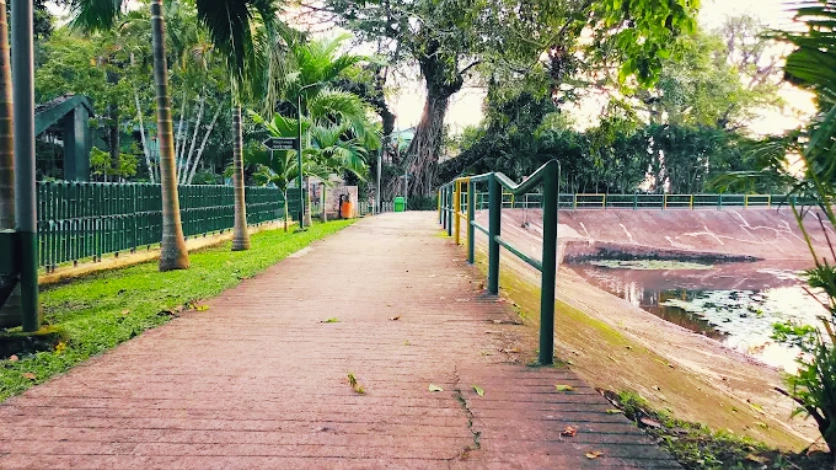
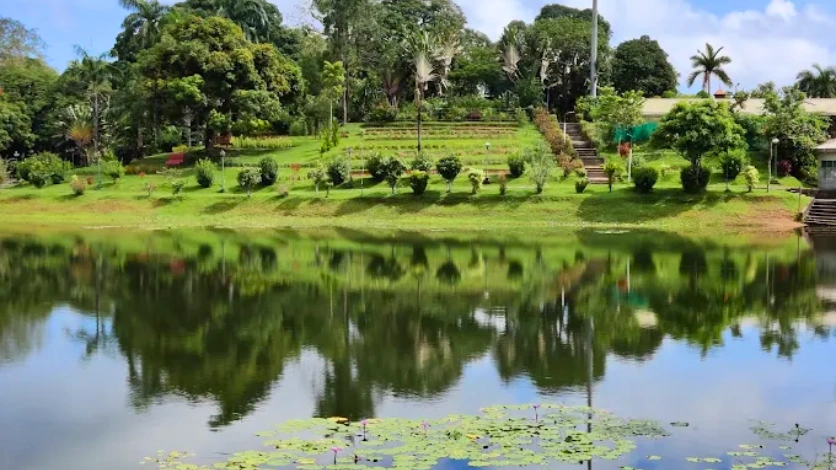
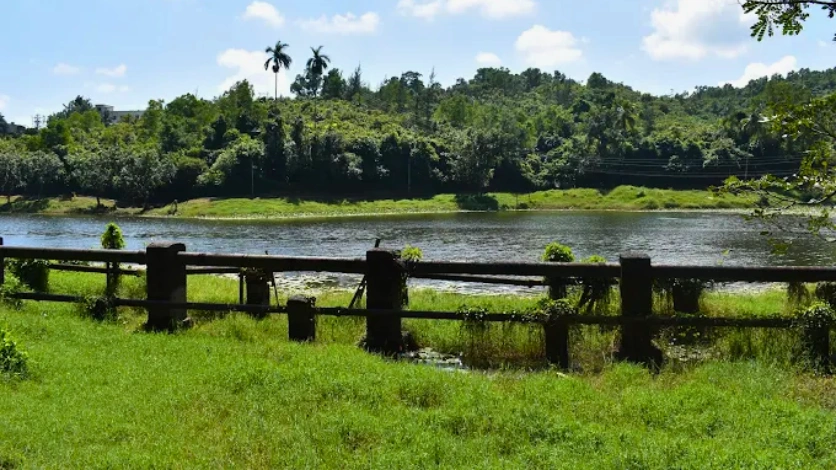
Gandhi Park does not need a ferry, a permit, or a full day. It is a proper city park on RGT Road in the centre of Port Blair, built around the Dilthaman tank, a reservoir that was once the only source of drinking water for the entire island. Entry is free. The lake is still there, now used for boating. Around it you will find a Mahatma Gandhi statue, Japanese WWII bunker and temple ruins, an amusement area, a nature trail, and enough shade to make a morning or late afternoon here genuinely pleasant. It is a good stop to build into a Port Blair city day rather than a dedicated excursion on its own.
About Gandhi Park of the Andaman Islands
Gandhi Park is built around the Dilthaman tank, a large artificial water body that was historically the sole source of drinking water for Port Blair and the surrounding area during the British colonial period. When the city developed more modern water infrastructure, the tank was repurposed, the surrounding land was landscaped into a public park, developed in just 13 days according to official Andaman administration records.
The park sits on RGT Road in the Shadipur area, roughly 1 km from Aberdeen Market and the main jetty. It is as central as any attraction in Port Blair gets. A large statue of Mahatma Gandhi occupies the middle of the park, with gardens, shaded walking paths, and the lake surrounding it. The atmosphere is calm on weekday mornings; evenings and weekends are busier with local families and children.
What makes Gandhi Park more interesting than a standard city park is the layer of World War II history sitting quietly on its grounds. The Japanese occupied the Andaman Islands from 1942 to 1945, and the bunker and temple ruins they left behind are still visible here, not behind glass or in a display case, but as physical structures you walk past on the nature trail. They are easy to miss if you do not know to look for them, but worth examining if you are building a broader picture of Andaman's wartime history alongside a visit to the Cellular Jail.
Quick Facts
- Built around Dilthaman Tank, once Port Blair’s main drinking water source during British rule.
- Developed in just 13 days, a rare rapid-creation fact in official records.
- Central Mahatma Gandhi statue with gardens, lake, and walking paths around it.
- WWII remains include a Japanese bunker and temple from the 1942-45 occupation.
- Boating, small rides, lakeside trail, and a children’s library inside the park.
- Free entry; boating and rides are paid separately. Open all days.
The History of Gandhi Park
, From Colonial Water Tank to WWII Occupation and Public Park
The Dilthaman tank at the centre of Gandhi Park was not originally a recreational feature. During the British colonial administration of the Andaman Islands, it functioned as the primary, and for a long period, the only, source of drinking water for Port Blair. The tank was managed as critical infrastructure rather than a public amenity, and the land around it was not open to general use.
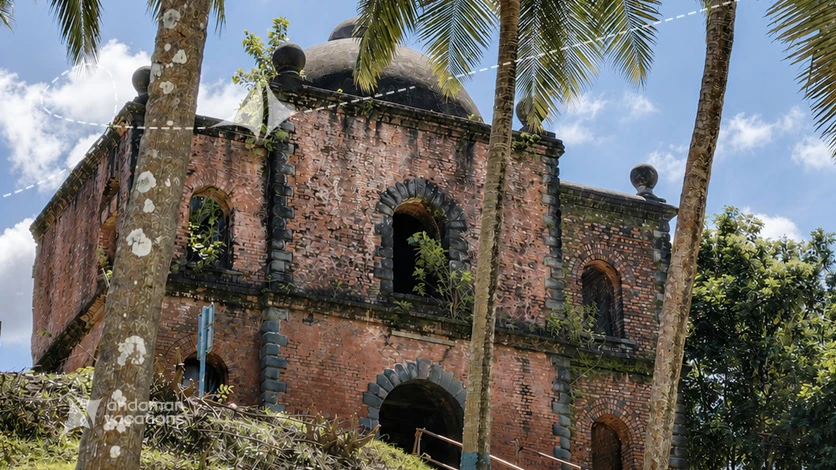
During the Japanese occupation of the Andaman and Nicobar Islands from 1942 to 1945, the area around the tank became a site of Japanese military activity. A bunker was constructed for defensive use, and a temple was built for the Japanese garrison stationed in Port Blair. Both structures still stand within the park grounds today, their original purpose clearly visible in the construction style despite decades of weathering.
After Indian independence, Port Blair developed its water supply infrastructure beyond the Dilthaman tank, which reduced its operational importance. The land was eventually converted into a public park. The development reportedly happened fast, official government records describe the park being built in just 13 days, an unusual timeline for a project of its scale. The Mahatma Gandhi statue was installed at the centre as the park's main landmark.
Today the park functions as a community space for Port Blair residents and a low-key sightseeing stop for visitors wanting a city-centre break from the ferry terminals and island logistics that occupy most of an Andaman itinerary.
Plan Your Port Blair City Tour with Our Local ExpertsWhat to See on Gandhi Park
Gandhi Park works on several levels at once, city park, minor historical site, family activity spot. Here is what is actually on offer.
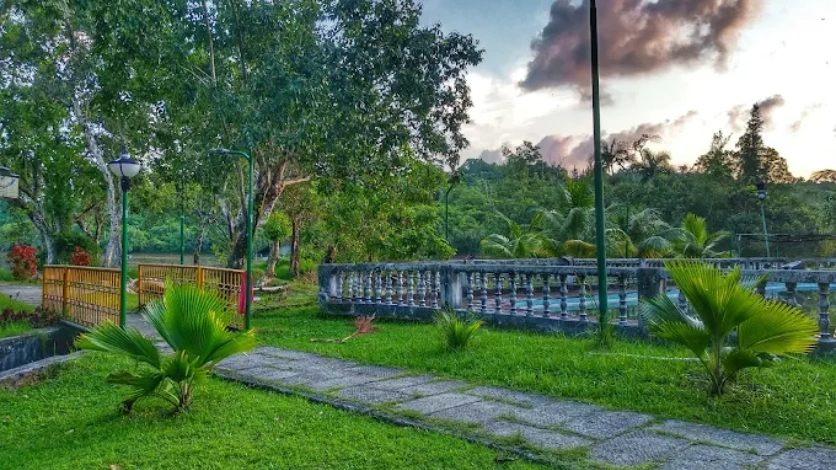
Boating on Dilthaman Lake
Enjoy a peaceful boat ride across Dilthaman Lake while admiring the greenery. The calm waters create a relaxing experience for families, couples and nature lovers.
Japanese Bunker & Temple Ruins
Discover World War II-era Japanese bunker and temple ruins hidden within the park, offering visitors a fascinating glimpse into Port Blair's wartime history and heritage.
Nature Trail & Birdwatching
Walk through shaded trails while spotting birds, butterflies and plants. The surroundings make visits refreshing during early mornings.
Rides & Children's Library
Families can enjoy children's rides, gardens and a library, making Gandhi Park an entertaining destination where kids can learn while having fun.
Gandhi Park as Part of a Port Blair City Day
Gandhi Park works best as one stop on a broader Port Blair city sightseeing plan rather than a standalone destination. The park itself takes 1 to 2 hours to cover properly, the lake walk, the WWII ruins, and boating if you have children with you. What makes it useful is its location: it sits close to the Aberdeen Market area, which means it fits naturally into a Port Blair morning that also includes the Anthropological Museum and Marina Park, both nearby.
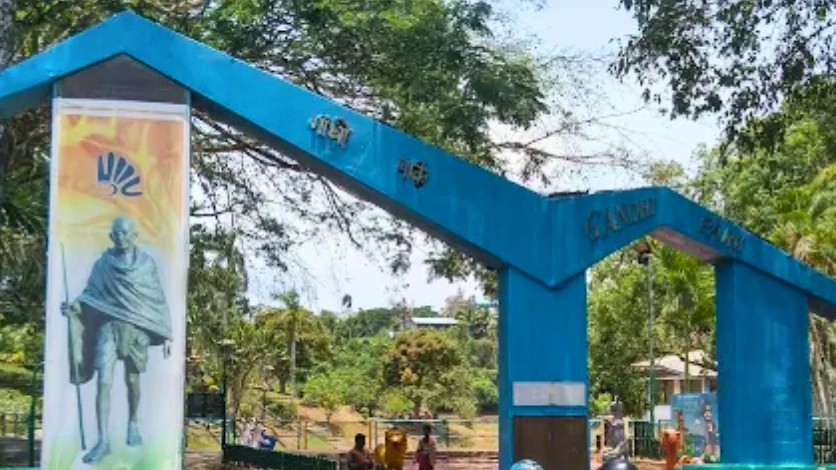
The food options outside the park gates are worth knowing about. Pani puri stalls, ice cream carts, and basic snack counters are set up along the approach road, a practical detail if you have children or want something light before or after the walk. There are also a few restaurants within easy walking distance on RGT Road.
If you are in Port Blair for only one or two days, Gandhi Park is worth fitting in if you have a free morning hour before a ferry or afternoon ferry departure. It is not a half-day commitment, it is a genuine hour-long stop that adds historical and local texture to a Port Blair visit without requiring any advance booking or logistics.
Plan Your Gandhi Park VisitTips for Visiting Gandhi Park
- Go on a weekday morning. Evenings and weekends draw large local crowds, particularly around the amusement rides and boating area. The park is noticeably quieter, and more pleasant to walk, before 11:00 AM on weekdays.
- Look specifically for the Japanese bunker and temple ruins on the nature trail. They are easy to walk past if you are not looking for them, and they are the most historically interesting part of the park.
- Carry small change for boating and amusement ride tickets. Digital payments are not reliably accepted at the activity counters inside the park.
- Combine Gandhi Park with the Anthropological Museum and Marina Park, all three are within 2 km of each other in central Port Blair and together make a solid half-day city sightseeing circuit.
- The food stalls outside the park gates are worth stopping at. Options include pani puri, ice cream, and Chinese fast food, useful before a long afternoon ferry or island visit.
- The park is open all days of the week. Unlike many Port Blair attractions that close on Mondays, Gandhi Park has no regular weekly closure day, confirm locally if you are planning a Monday visit.
Frequently Asked Questions
No. Entry to Gandhi Park is free. Charges apply separately for boating on Dilthaman Lake and for amusement park rides inside the complex. Carry small change, digital payments are not always accepted at the ride and boating counters.
The Dilthaman tank is a large artificial water body at the centre of Gandhi Park. During the British colonial period it was the sole source of drinking water for Port Blair and the surrounding area. After the city developed other water infrastructure, the tank was landscaped into a park lake used for boating. The entire Gandhi Park was developed around this lake in just 13 days.
Yes. The park contains the ruins of a Japanese bunker and the remains of a Japanese temple, both dating to the Japanese occupation of the Andaman Islands from 1942 to 1945. These are not formal museum exhibits, they are on-site structural remnants within the park grounds, worth looking for on a walk around the lake.
Boating on Dilthaman Lake, amusement rides, a nature trail around the lake, and a children's library are the main options. The park also works well for a quiet morning walk, birdwatching, and photography. Food stalls outside the park gates sell snacks, pani puri, ice cream, and light meals.
Gandhi Park is on RGT Road in the Shadipur area, about 1 km from Aberdeen Market and the main jetty. It is reachable by auto-rickshaw from anywhere in Port Blair for under ₹50. The park is centrally located enough that most visitors staying near Aberdeen Bazaar can walk there in 10 to 15 minutes.
Yes. The amusement rides and boating are primarily aimed at families with children, and the park is one of the more child-friendly spots in Port Blair that does not require a ferry or permit. Weekday mornings are the least crowded. Weekend evenings draw large local crowds, plan accordingly if you prefer a quieter visit.
Include Gandhi Park in Your Andaman Itinerary
Gandhi Park is a one-hour stop with free entry that fits into a Port Blair city day without adding cost or logistics. The Dilthaman Lake, the WWII bunker ruins, and the central location make it worth including alongside the Cellular Jail and Aberdeen Market on a full Port Blair sightseeing day.
Our team at Andaman Vacations India builds Port Blair city itineraries that cover the right places in the right order without wasted travel time. Tell us your schedule and we will put together a Port Blair day plan that covers Gandhi Park, the Cellular Jail, and your island departures cleanly.
More Places to Visit in Port Blair
View All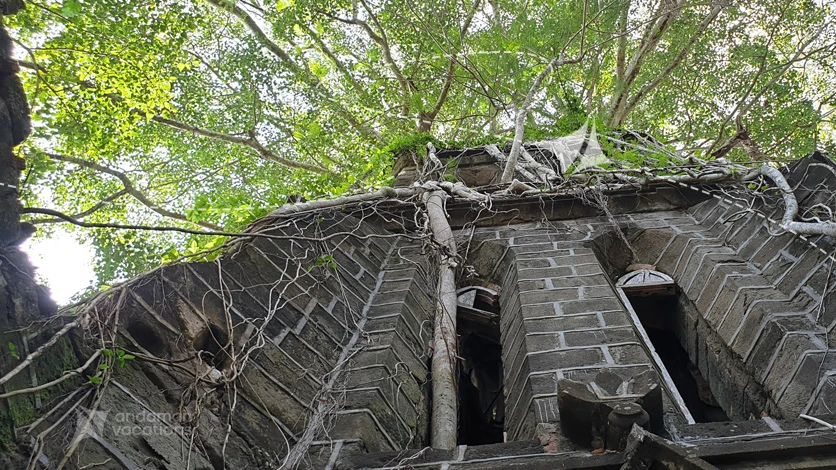
Related Travel Guides
View AllDiscover helpful guides and travel tips related to Gandhi Park.
 14 July 2025
 18 Nov 2025
 21 Jan 2026
Events & Festivals
Monsoon Food & Culture Festival 2026: What's On at ITF Ground This Week
Read More 13 Jul 2026